

Now that you have an understanding of Keywords and Personas, the next step is for you to Plan and Strategize building your house with the architect in step 3. I’m not sure where you want to build your home but I’m most certain you won’t’ consider a place where hurricanes and earthquakes are the norm! Or an unsafe neighbourhood where you can’t take your K9 for a bit of exercise in the outdoors…
It goes without saying then that the location you choose for your home will determine the type of experiences and memories you will have while staying there. So choose well and wisely!
Step 2: On Page & Off Page SEO (Plan and strategize building your house)
Think of step two as deciding on what you want to put in your house, and what services/utilities you want to be connected to .i.e. gas, electricity, water… etc.
Now let’s explain to you what On-page and Off-page SEO are all about…
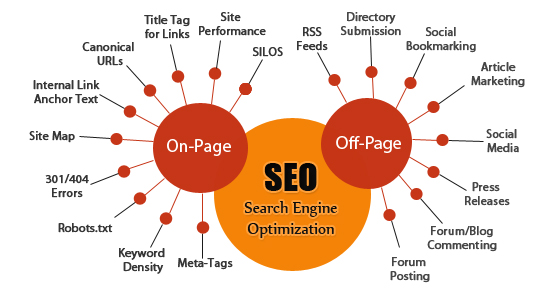
On-page SEO: includes everything and anything you can do to your website in order to rank higher with search engines e.g. Title of the article, content, images, URL structure, keyword density etc…
Off-page SEO: This type of SEO refers to things that you may not have control over on your website. You have no control over what reviews visitors give you on your social media platforms, who follows you or not, how many likes you get and so forth.
It’s quite important for you as an entrepreneur to know and understand the difference between the two types of SEO as it will provide you the opportunity to balance your SEO performance and see which areas you can improve in order to rank with search engines.
The truth is there’s not one that is more important than the other, as pointed out in the previous statement both On-page and Off-page SEO are equally crucial in ranking with search engines. Link building and social presence are just as important as content.
Now that you are familiar with the difference between On-page and Off-page SEO, let’s provide you with techniques used in both pages.
ON-page SEO techniques:
Page Titles: It is of high importance that you include your keywords in your title. This will inform search engines on what your article or blog title is about and when your customers search for your product they will be able to find you on the search engine.
Meta Descriptions: Meta Descriptions are also a great way of describing and summarizing what a page is about.
They’re usually found on a search engine result page and describe your products and services.
Here is an example of a good Meta description:
Not only does it entice you to visit the Steers website, but in just two lines the product and price is stated as well as the search word ‘menu’ is mention in the description as well.

Meta tags: Meta tags are words used to describe your article or webpage. They provide an idea of what your content is about and search engines love that it makes their job much easier. They are included in both the title and description of your webpage.
URL structure: This is another important on-page SEO factor as your URL may make it possible for customers to find you and for search engines to rank you.
A good URL looks something like this:
http://www.spur.co.za/menu/light-meals
Busy URLs usually do not rank well even if search key words are included (Soccer Balls). The digits and letters at the end of the URL make it difficult for search engines to crawl through your website. You have to make things as simple and short for mobile searching purposes.
http://www.adidas.com/us/balls-soccer-sport/_/N-1z13xgbZ1z13y8wZ1z13y9u
Tags in the body of the content: Headings used in the title tag and the rest of the article/ post should contain your keywords. This makes it easier for search engines to detect what it is your topic is and what is important within your content. Also make sure to shorten paragraphs in order for your readers to go through everything much easier. Search engines also look for bolded or CAPITALISED words in order to summarize what the webpage is about.
Example:
HTML: Displayed As:
Main Heading
Main Heading
First paragraph content.
First Paragraph content.
Sub Heading
Sub Heading
Second paragraph content.
Second paragraph content.
etc…
Keyword Density: Keyword Density is a big NO with search engines, repeating the same keywords over and over again may seem like you’re tricking search engines into ranking you well. So be careful of how many times you use words. Rather tell a compelling story with your content.
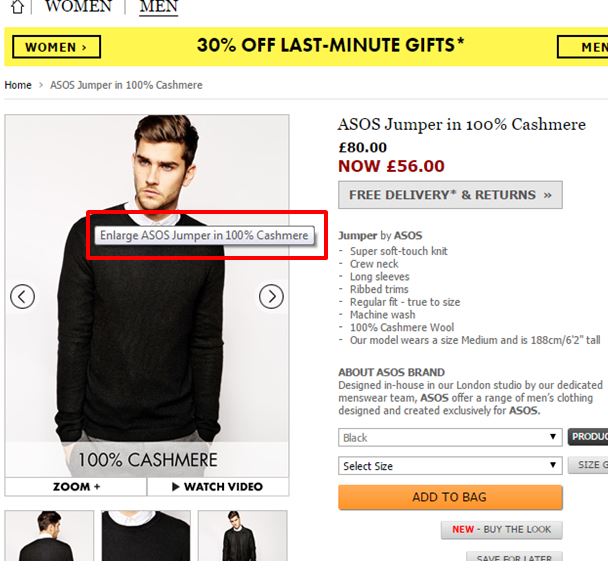
Images: The images you use on your website for SEO should include a description with keywords on them (Alt Text). Your image should also be relevant to your content.
Here’s another great example of Images with descriptions.
Before viewing the product, a description of it is already provided to you. Not only does this make navigation and website visit a pleasant one for visitors, but search engines rank your website on Alt text and descriptions on images as well.
Internal Linking: These are useful links which are found within your website and connect one article to another. It’s used a lot by bloggers and is one of the best ways to build links. It’s a good way to send people from one page to another while reading copy. These links should only be used when the link leads to a page with more information on that topic.
Content: One of the most important elements of SEO, content. Search engines and users are always looking for websites which have fresh, original and valuable content. So always update your website with new information.
Speed-up loading your website: The speed at which your website loads is crucial in your customers visiting your website. Always make sure that you test it often and upgrade your website technology if and when necessary. With more and more people using their phones for search purposes, it’s only crucial that the speed of your website is up to standard.
OFF-page SEO Techniques:
Social-Networking: Social Media .i.e. Facebook, Twitter, LinkedIn, Google Plus, YouTube, Instagram, Flickr and many more covers one of the ways in which you can gain links to your website. By sharing content and images on social media sites not only can you increase your links by those impressed by your content but provide a good reputation for your website as well.
Blogging: Blogging is a great way to get search engines to frequent your website as they have to repeatedly check if there is any updated content. The same goes for your customers, they return to your bog for fresh content and share it with friends and close sources. Which equals more links and ranking for your website.
Directory Submissions: Although people in the SEO/Marketing field insist that directory entries are a thing of the past, some still use them. Even if it is the least used form of link building, it’s worth a try to submit your website .i.e. Dmoz, Business.com use them as they are relevant and add value.
Social Bookmarking: Social Bookmarking websites such as Reddit, Digg, Delicious etc… Are a perfect way in submitting your articles and blog posts. Search engines love these sites so it would be great to engage in social bookmarking.
Link Baiting: Link baiting looks at blog posts that are excellently written that other people immediately will want to be linked to you.
Photo sharing websites: Another good idea to gain links to your website is to share your own images or any other interesting images on websites such as Flickr, Pinterest, and Photobucket etc…
Video Placing/Marketing: Video marketing applies the same concept, instead of uploading images you can share videos on websites such as YouTube.
Business Reviews: Business reviews are great in gaining online presence. You could ask another business to write a review on your website or vice versa.
Answering questions on other websites: Answering questions on popular websites can increase the number of links to your website and also gain you a solid online reputation as an opinion leader in your industry.
Forum Postings: You can open up your own forum or participate in one online, build links for your website and add value to it.
You most certainly by now know the difference between On-page SEO and Off-page SEO. Shifting once again to our property building example, what would a house be without a great architect and design team for your interior decorating? Not much! Which leads us into our Third Step: Involve the Entire Team.
Step 3: ‘The House Design – Architects & Interior Designers (‘Involve the Entire Team’).
“In union there is strength”
We’ll keep it simple and short with Step 3. When strategizing and planning to build your house you can’t do it alone, maybe for a while but in the long run you surely will need assistance. You’ll require the help of an architect who knows everything about plots, angles, lining etc… Not forgetting the creative ‘know how’ of interior designers who work with space, lighting, texture amongst many other aspects.
Apply the same scenario to you as a business owner, you should make sure that all departments in your business are involved in your SEO initiatives. Especially your Marketing and Sales personnel as they’re the ones who deal with your customers directly and are more than likely to be able to answer questions about them.
We said we’d keep this step simple, we most certainly did!
In SEO just as in property building, where you place your house (content, links, and social media) will determine its value. On-page and Off-page SEO in this instance are your ‘location’ therefore you have to think very carefully what you place where. Both On-page and Off-page SEO are important, there’s not one which is more important than the other as search engines rank both for different reasons. Therefore as a business owner you’ll have to balance your attention between the two.
Whenever carrying out a SEO campaign for example, make sure that every step is in line with your business goal and objectives. That way all your communication channels will be different but the message will be the same, SEO included. And lastly, all of your departments should be involved in your SEO, if it means some staff members will require basic training then by all means provide it. You could even engage in internal training which would not only save you the time but resources too.
Get your team and do this together, as the saying goes: “In union there is strength”.
